Saturday, May 31, 2008

The Latest and Not-so-Greatest

The battle over suburbia's future

Gil Smart, June 1, 2008 Sunday News


And, what exactly does this have to do with Lancaster?

The real news story mentioned in this article? - McMansions no more

This is an utter embarassment. LNP will allow this man to basically rip off this news story from Allentown. They will let him write about it but never mention its title or who wrote it. Then they put it in the editorial section as an opinion column.

Please, someone put this horse out of his misery!

Hillary drunk again, sees face on Mt. Rushmore


Full Story

Wednesday, May 28, 2008

Hydrogen Injection Updates, Take 2


This first image demonstrates that I reached 127.6 miles on somewhere between 15-20% of fuel consumption. Twenty percent of a 14.5 gallon tank is 2.9 gallons. At 128, the fuel gauge dropped one bar.

(127.6 miles / 2.9 gallons) = 44 MPG


The second image is somewhere between 20-25% of fuel consumption. While this picture shows 145, I managed to achieve 157 miles before the gauge dropped.

The calculation below shows what I have gained thus far.

Twenty-five percent of a 14.5 gallon tank is 3.625 gallons.

(157 miles / 3.625 gallons) = 43.3 MPG

Looking from the reverse, I should go an optimal 30 miles per gallon times 3.625 gallons is 108.75 miles. However, I've gone 157 miles and the gas gauge just reached 1/4 of a tank. That is at least an improvement of 48.25 miles.

If I went 150 miles at 30 MPG, shouldn't I have used 5 gallons? Yet, I've used 25% of my gas tank, or 3.625 gallons. That is a fuel savings of 1.375 gallons (or $5.29) so far!

Tuesday, May 27, 2008

..and the "vast right-wing conspiracy" continues...SIGH

Bill Clinton says wife is victim of a ‘cover up’

Update on Hydrogen Experiments, Take 2


Ok, so the first take had a few minor glitches here and there, but was still able to produce numbers suggesting 35 MPG. There were some sight gauge leaking problems (leaked water out of the tank overnight) and some issues with old jumper cables. Now that those have been addressed, the initial results look even better.

Here is the method I am using now to determine the miles per gallon. I think that this method is the most exact I can use.

The picture shows that the gas tank reads 10% empty. In reality, it is somewhere between 10-15% empty. Once it reaches 15% empty, another 5% bar is lost. So I will look at it as a range from 10% to 15% empty from a 14.5 gallon tank.

If it's 10% empty, I've used 1.45 gallons. If it is 15% empty, I've used 2.175 gallons. (14.5 x 0.10) or (14.5 x 0.15)

In the first case, since I travelled 105 miles, my miles per gallon would be (105 miles/ 1.45 gallons) or 72.4 MPG. That is the best case scenario and I don't think it fairly represents the reality of the situation.

The second case, (the "worst case scenario"), it would be (105 miles/ 2.175 gallons), or at least 48.3 MPG. I believe that this is very close to the truth because just after taking this picture, I noticed that I lost a 5% bar on the gas gauge down to 15%.

This is also good because I can look at it from the reverse direction. If I went 105 miles at an optimal 30 MPG, then (105 miles * 1 gallon/30 miles) = the number of gallons. I should have used 3.5 gallons, but the gas gauge says I used at most 2.175 gallons. So I picked up 1.325 gallons of fuel. In reality, I didn't add any fuel. It is simply the benefit of adding Brown's gas (2 parts hydrogen and 1 part oxygen) to the air intake system.

This concept has been around since 1935.

Well, here is one way to get noticed, SHARON STONE

Wednesday, May 21, 2008

Day 11: Hydrogen Fuel Experiment


Here is my car at 1/2 of a tank (7.25 gallons) and I've gone 250 miles, or 34.5 MPG. Normally, it would get around 196 (at 27 MPG). That is an improvement of 28%. If I calculate at 30 MPG, I would get 214 miles. That would still be an improvement of 15%.


This is a picture taken on a rainy day of my "exhaust". The car is running and I was able to see a fine mist, although it doesn't appear on the camera. Savefuel.ca claims that the carbon buildup in the engine is reduced by the hydrogen combustion and that the car emissions are greatly reduced. When hydrogen and oxygen gas go through the combustion engine, the result is primarily water vapor.

It's Obama! It's Obama!!


Source

Friday, May 16, 2008

Day 6: Update on Hydrogen Fuel Experiment


In case you cannot make out this shaky picture, that's my tank at 1/5th (20%) of the way down and I've travelled 150.0 miles. The pictures from yesterday never turned out.

One fifth of a 14.5 gallon tank is 2.9 gallons. I'd say 150 miles on 3 gallons puts me at 50 MPG. Let's suppose the gauge is faulty and I've actually used 1/4th. That still puts me at nearly 42 MPG.

Not too bad considering I am supposed to get 27 MPG on average.

Let's say I get 150 miles out of every 1/5th of tank of gas. I should be at 750 miles on a tank of gas (at 50 MPG) vs. 391.5 miles on a tank of gas (at 27 MPG). That is an improvement of 1.9 times - almost double.

Wednesday, May 14, 2008

Day 4 : Update on Hydrogen Fuel Experiment


Well, I've reached over 90 miles with the fuel indicator showing a 5% drop in the level of fuel in the tank. My current guess is that I am getting somewhere around 50-60 MPG, although I should stress that that is just a guess. I suppose I could be near 10% but haven't quite reached it yet. That will be all the driving for today.

If I were getting normal gas mileage and travelled 90 miles, I should have used 3.33 gallons, or 23% of my fuel (3.33/14.5 gallon capacity).

Tuesday, May 13, 2008

Day 3: Update on Hydrogen Fuel Experiment


Above is a picture at the 60 mile mark.

Actually, I am currently further than 60 miles and the gauge still hasn't indicated the first 5% decrease in the fuel level. I am considering that this may be a fluke in the electronic measurement of the fuel tank, but it is still impressive to me that it hasn't moved by Day 3.

I am cautiously optimistic and will continue to track the odometer readings.

If I were travelling at 27 MPG, on 14.5 gallons of fuel, I should travel a total of 391.5 miles. Sixty miles is about 15% of the way through the trip.

Hillary hints at pulling the plug

Full Story

Monday, May 12, 2008

Day 2, Update on Hydrogen Fuel Experiment


Since I filled my car with gas, I travelled 36.5 miles. My car has a 14.5 gallon capacity tank. It is supposed to get 27 miles per gallon in the city on average.

Let's say that I got 27 miles per gallon and we can figure out how far I can go on a tank of gas (at 27mpg).

(27 miles per gallon) x (14.5 gallons) = 391.5 miles

Therefore, I would be (36.5 miles/ 391.5 miles) percent into my trip, or 9%. Therefore, I should have also used 9% of my fuel. But the gauge does not even read a 5% change!

If I calculate at 50 mpg, it is:

(50 miles per gallon) x (14.5 gallons) = 725 miles.

If this were true, I would be 36.5 miles into a 725 mile trip, or 5%.

Initial testing and results look promising that I have boosted my gas mileage significantly, but I will continue to track the progress throughout the entire first tank of gas.

Sunday, May 11, 2008

Bag It, Smart

Sunday News column

The milk here is packaged in plastic bags, which seems more environmentally friendly.


Really? Plastic bags are "environment friendly"? One has to go no further than CNN to see that plastic bags have been the enemy of eco-freaks for decades.


Great job, Gil! Thanks for saving the environment!

Saturday, May 10, 2008

Making my car a hybrid - tests and results

Well, I've completed converting my conventional gas engine car into a hydrogen hybrid car. It was a fairly simple process and I bought the unit at Savefuel.ca. Some assembly required.

This first image shows the water tank (the "hydrogen generator"), installed. In the generator are two stainless steel rods with two stainless steel plates, each with opposite electrical charges. Once this unit is connected to the battery, it will perform electrolysis on the distilled water/potassium hydroxide mix producing Brown's gas (or HHO). In other words, it is 1 part oxygen gas to 2 parts hydrogen gas.


The following is a shot of the same H generator next to the bubbler. The bubbler is basically just an empty tube/reservoir where HHO gas will continue into and back out of the top while excess water is captured.


Next is a close-up of the bubbler. No, that isn't water leaking, that is silicone that prevents leaking. I had to sand the top so it looks a little rough. No big deal. The hose leads away to the air intake manifold where I drilled a small 1/4" hole.


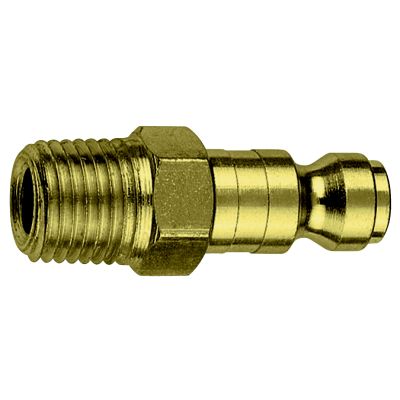
In the intake manifold hole, I placed a small injector I bought at an auto parts store. One end is designed with a threaded screw and the other end is designed to hold the incoming tube. It is hollow to allow the gas to pass through the brass piece directly into the manifold. This part is not the exact part, but bares some resemblance.


The claim is hat the unit will increase my mileage on the highway by 100% and in the city 50%. I will let you know the results!

Update #1: On Sunday, May 11, I drove my car a short distance (6.2 miles) with the hydrogen injection active. I am keeping tabs on how many miles it takes me on a full tank of gas so I can determine my MPG, or miles per gallon. I reached a maximum speed of slightly above 45 MPH with no problems at all. While it is too early to know if it is saving me fuel mileage, my car did seem to drive noticeably smoother and stronger. I'm keeping a small, charged battery booster along in the trunk and I disconnect the cables from the battery (to the hydrogen generator) when the car isn't running to preserve the car battery's charge.

Panel OKs measure to ban same sex unions

It's ALIVE!